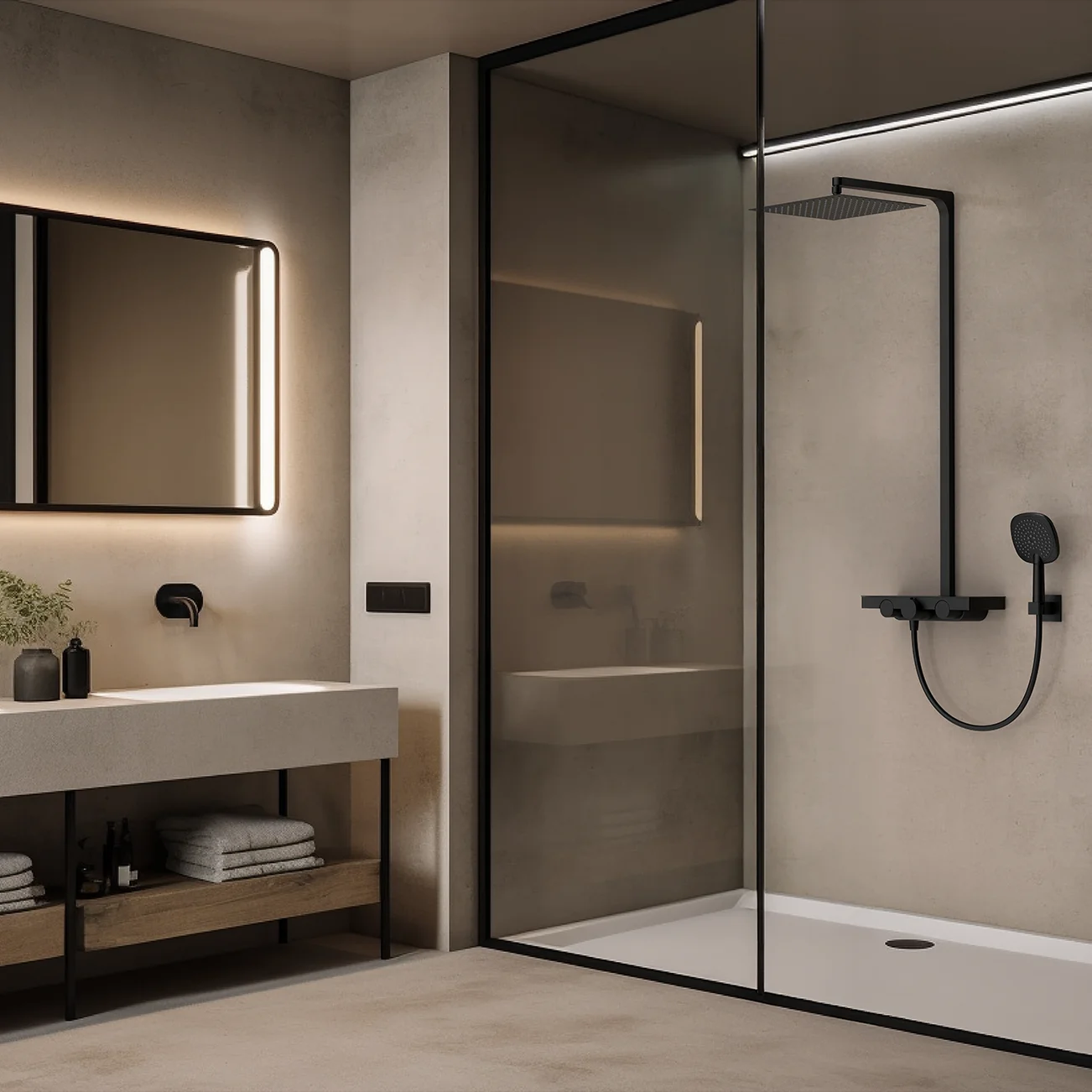
Design: Piet Billekens

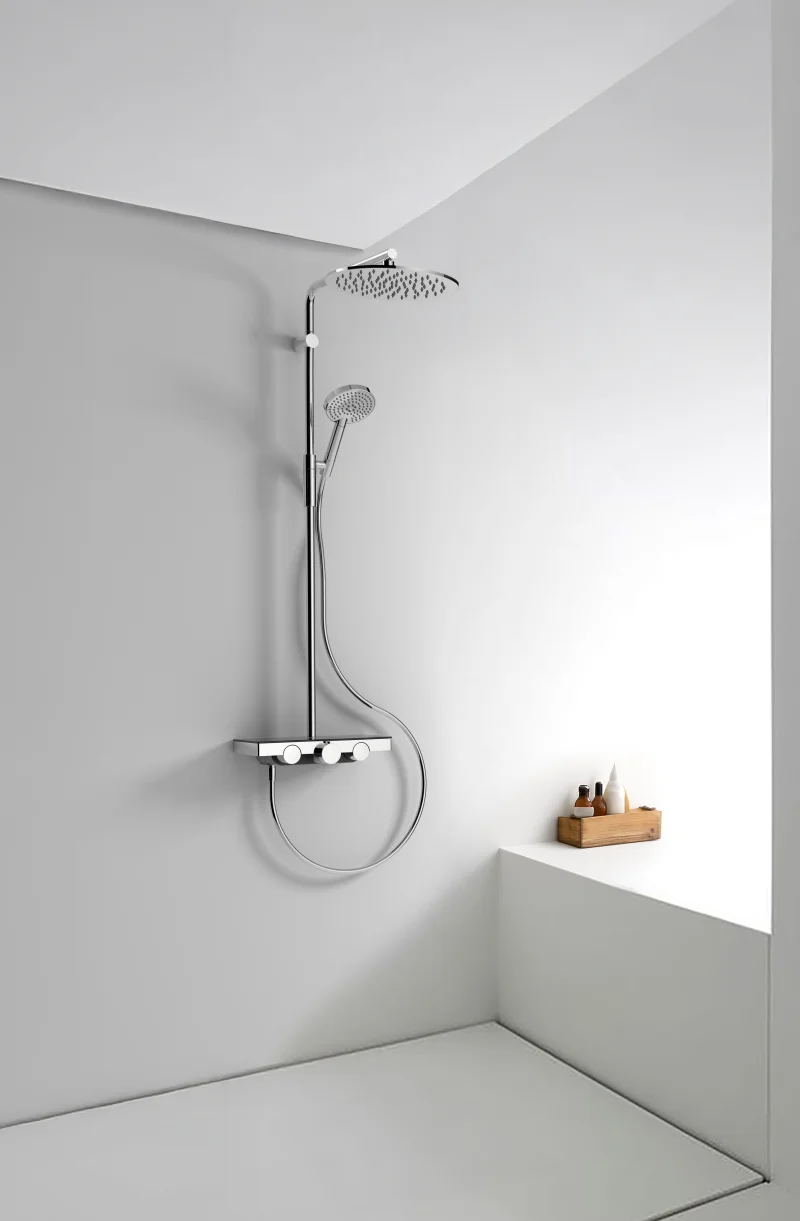
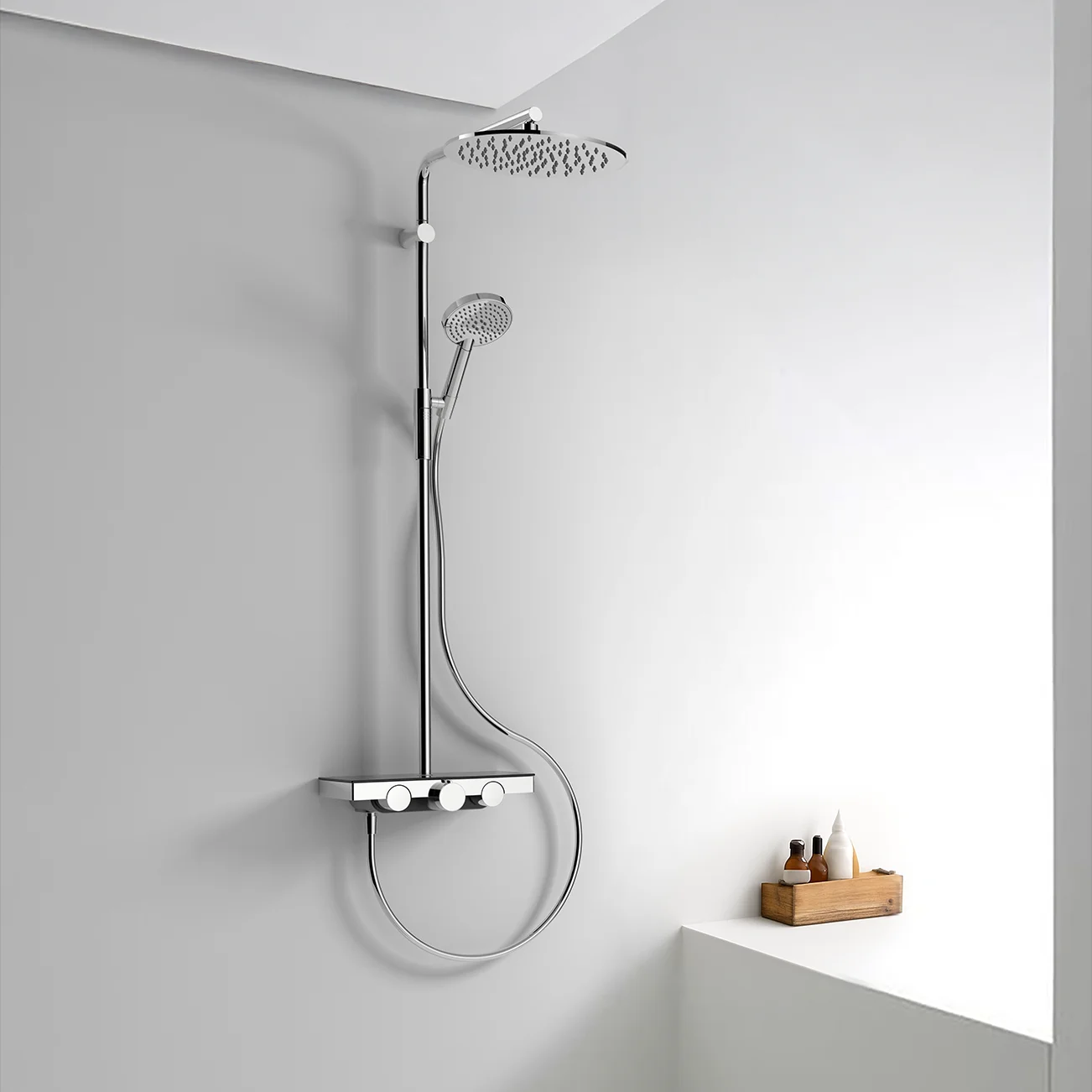
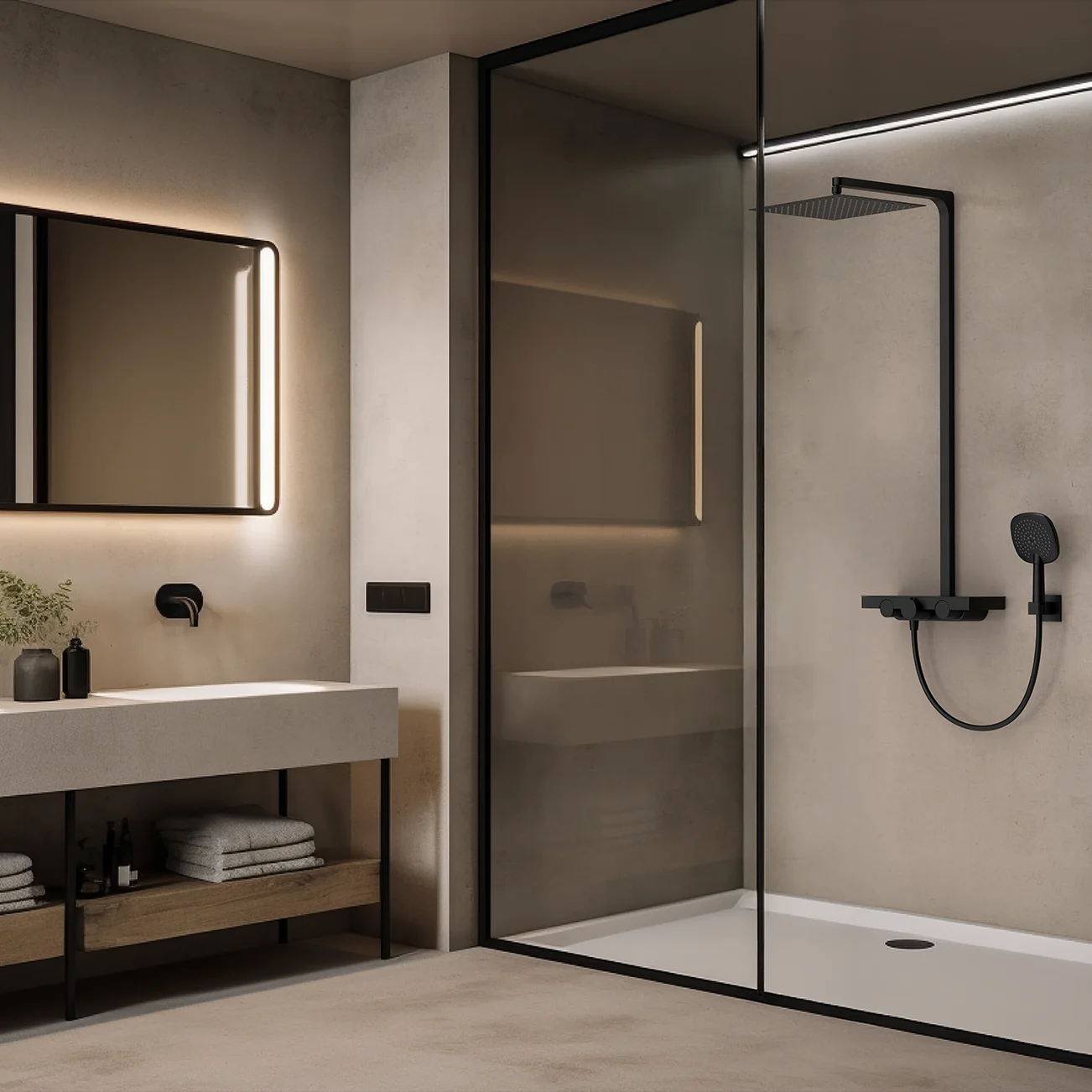
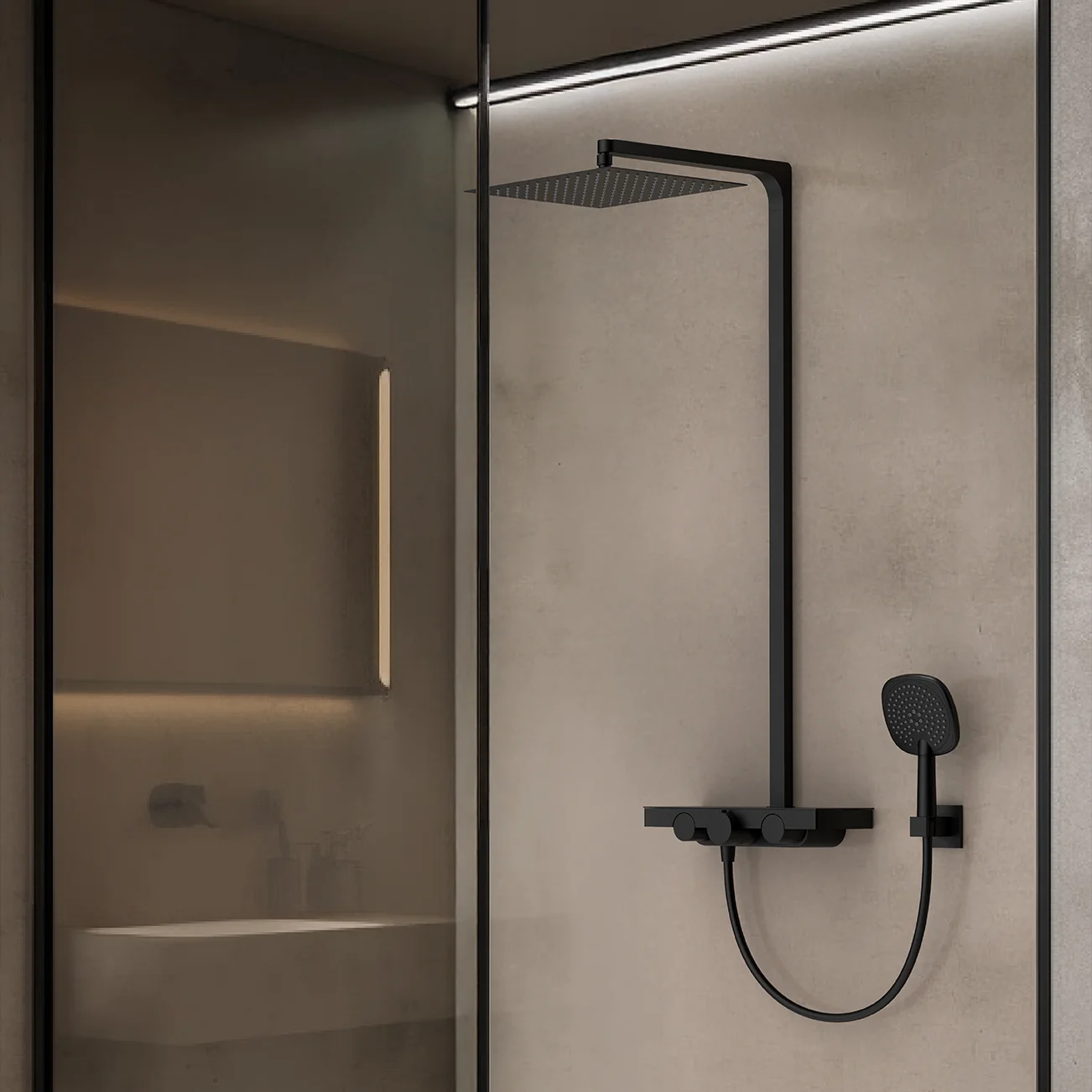
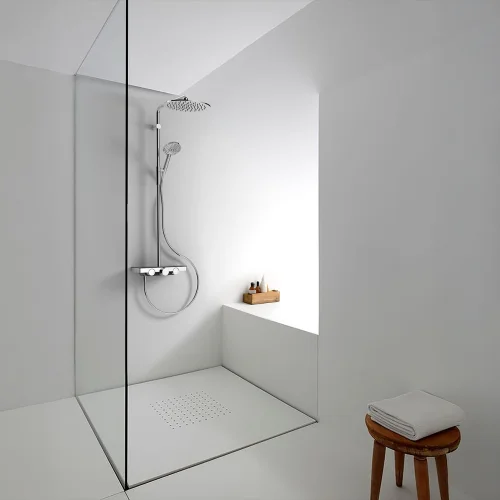
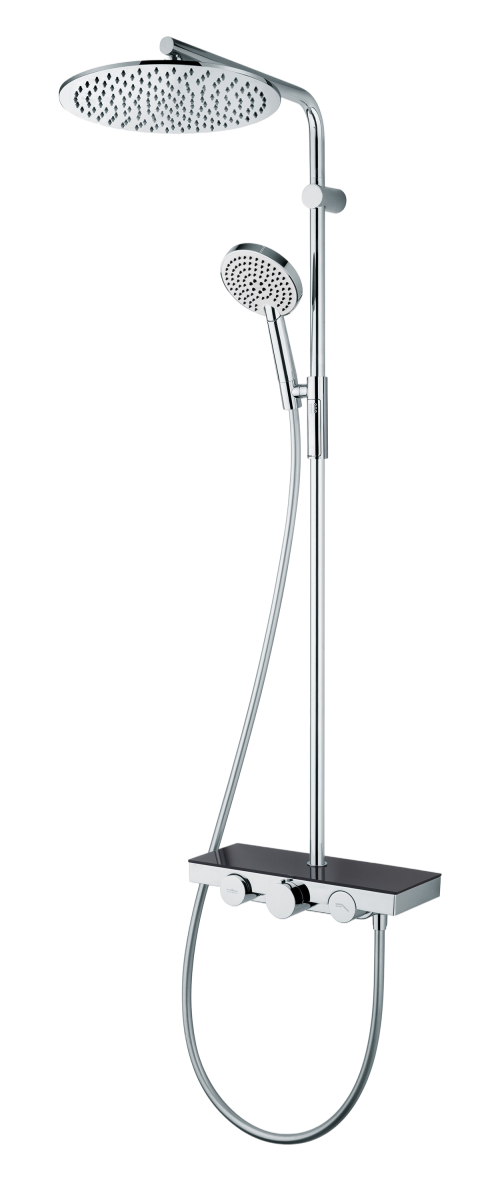
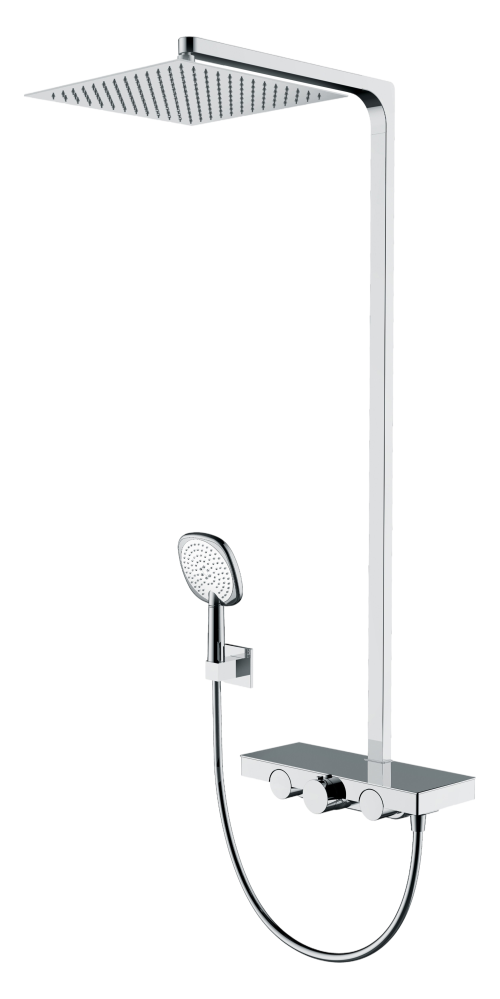
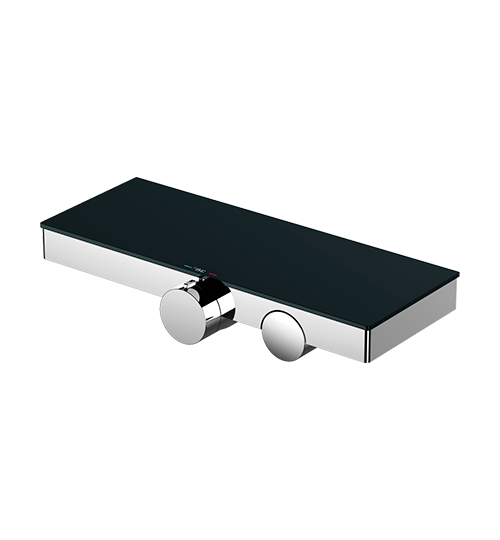
SIMETRY is born from a principle of order. A design that translates technical complexity into a clear, balanced, and rigorous composition. Designed by Piet Billekens, the collection is built around a thermostatic shelf defined by sharp and precise lines, structured through an essential geometry. The shelf, framed by a steel profile with 90-degree edges, expresses a solid and defined presence, while the upper surface – available in white or black glass, or steel in special finishes – introduces a refined material dimension. A balance between structure and surface. SIMETRY is conceived as a flexible system, capable of adapting to different design needs. The collection maintains a rigorous formal coherence, while offering the possibility to choose between a round or square shower column pipe, allowing natural integration within different architectural contexts. A controlled variation within a consistent language. A distinctive feature of the collection is the possibility to choose between a traditional external installation and a more advanced solution, where the technical body is integrated into the wall. In this configuration, the system disappears within the architecture, leaving only the shelf visible. The result is a clean, almost suspended presence, reducing visual impact to its minimum. A controlled subtraction. A form that simplifies itself.
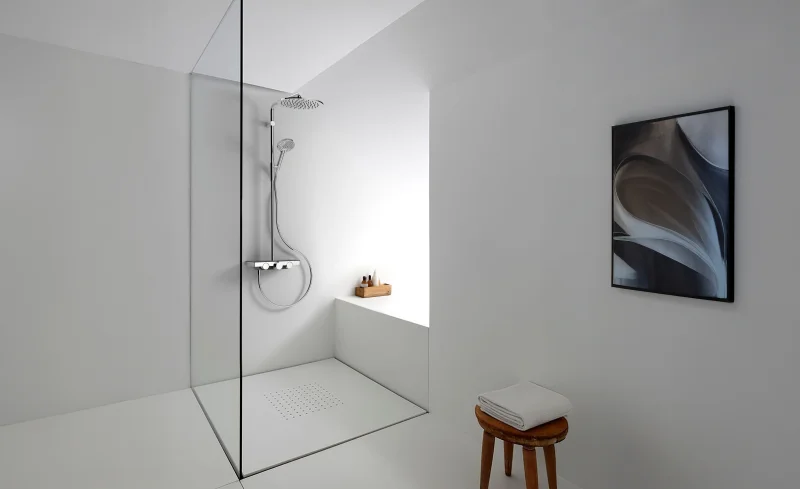
In real space, Anubi expresses a defined character, capable of becoming the focal point of the bathroom without compromising its harmony. It is a collection for projects that aim to stand out and for architectures that embrace contrast as a value, dedicated to those who see design not just as a solution, but as a statement.
In the external version, SIMETRY preserves its visual balance, with the central pipe integrating naturally into the composition. Thermostatic technology ensures stability and safety, while the internal fiberglass structure enhances insulation and durability over time. SIMETRY is a collection designed to be precise, versatile, and coherent. A system that adapts to space without losing its identity. For projects that seek order. For architectures that value structure. For a design that finds strength in simplicity.